The Khaliya Top trek is the quintessential Munsyari experience. In a single day, you climb from 2,200m to 3,200m through rhododendron forests and alpine meadows, emerging at a grassy ridge with 360-degree views of the Panchachuli peaks, Nanda Devi, and the entire Kumaon Himalayan range.
This guide covers everything you need to know to plan and complete the Khaliya Top trek — route, difficulty, preparation, and insider tips.
Quick Facts
| Detail | Information |
|---|---|
| Trek Distance | 6 km one way (12 km round trip) |
| Starting Point | Balanti Bangla (4 km from Munsyari by jeep) |
| Max Altitude | 3,200m (Khaliya Top) |
| Elevation Gain | 1,000m |
| Trek Duration | 3-4 hours ascent, 2-3 hours descent |
| Difficulty | Easy-Moderate |
| Best Season | March-June, October-November |
| Permit Required | No |
| Guide Required | Recommended but not mandatory |
Getting to the Trailhead
The trek starts at Balanti Bangla, a small settlement about 4 km from Munsyari town. You can reach it by:
- Jeep: Hire a local jeep from Munsyari. Cost: ₹300-500 one way. Takes 15-20 minutes.
- Shared taxi: Available in the morning. Cost: ₹50-80 per seat.
- On foot: Walk from Munsyari to Balanti Bangla (4 km, 1 hour). This adds to your total trek distance but is a pleasant walk through the valley.
Ask your hotel to arrange the jeep the night before. For the sunrise trek, the jeep needs to pick you up at 3:30 AM.
The Route: Step by Step
Section 1: Balanti Bangla to Forest Entry (1.5 km, 30 minutes)
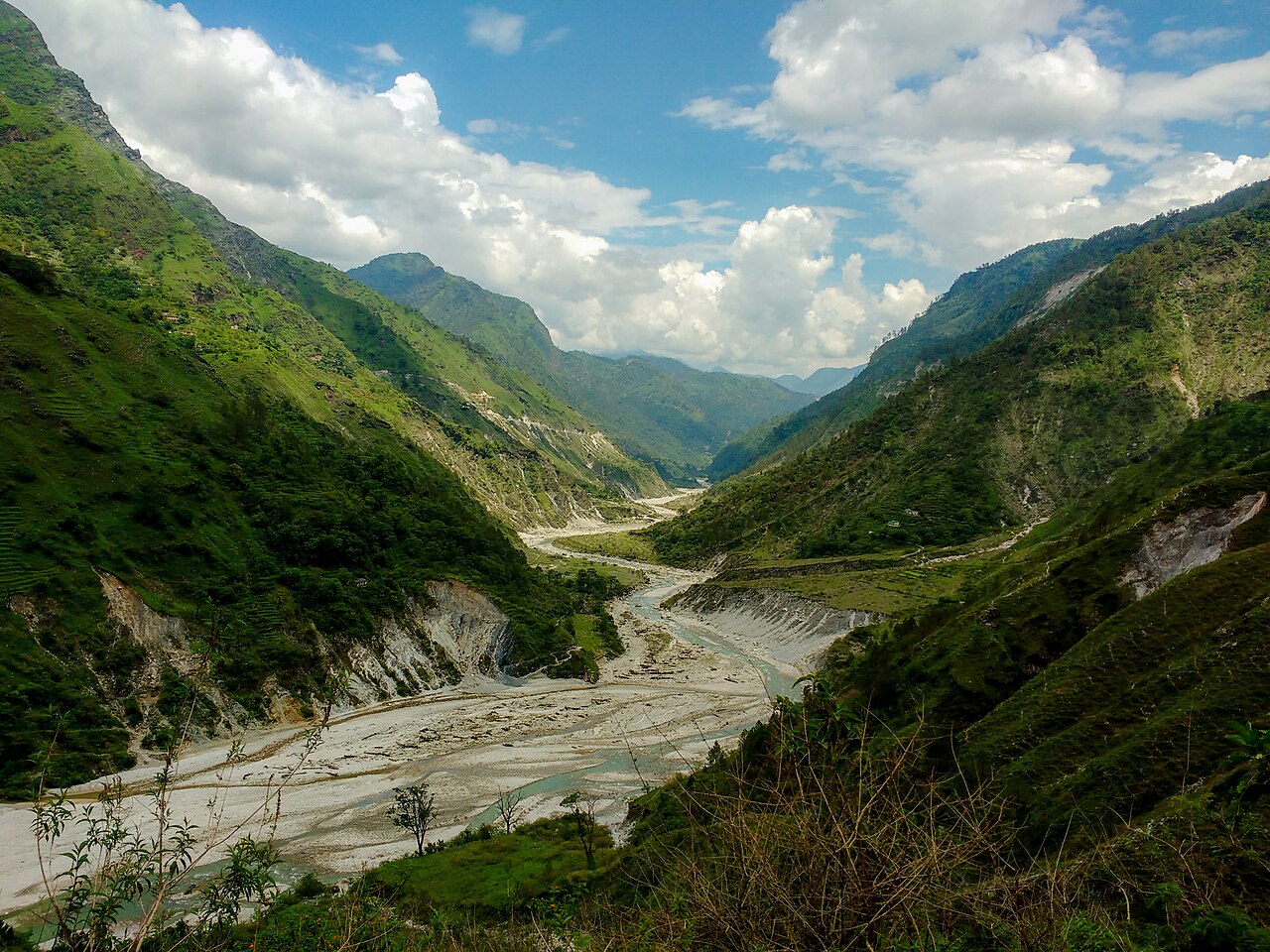
The trail starts behind the few houses at Balanti Bangla. It's a well-defined path that gradually ascends through open meadows with views back towards Munsyari and the Goriganga valley. After about 1 km, you enter the forest.
Section 2: Rhododendron Forest (2 km, 1-1.5 hours)
This is the most beautiful section of the trek. The trail climbs steadily through dense rhododendron and oak forest. In March-April, the rhododendrons are in full bloom — crimson and pink flowers carpet the forest floor and the air is filled with their subtle fragrance.
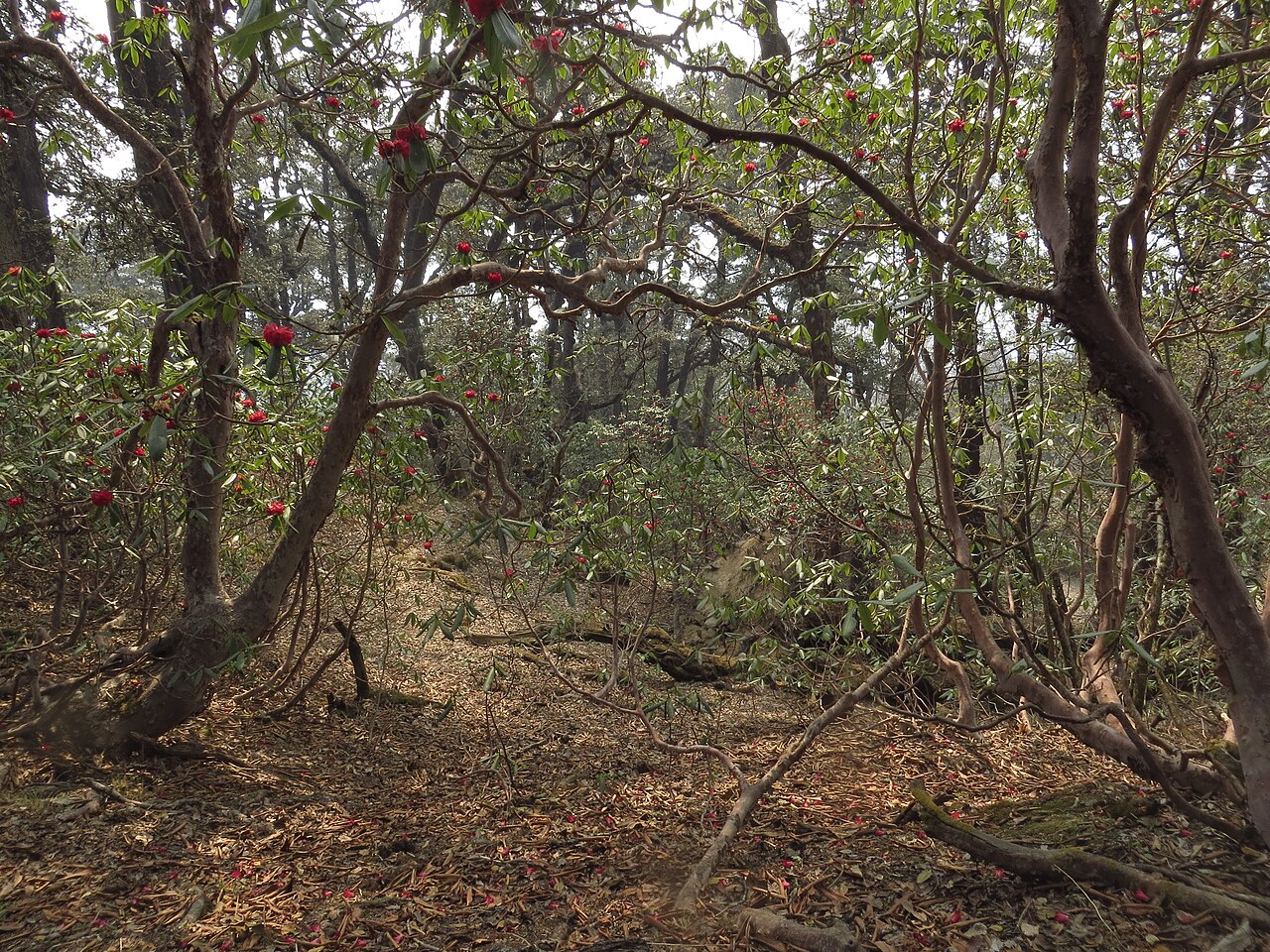
The trail here is well-defined but has some rocky sections and short steep pitches. Take it slow and steady. The forest canopy provides shade, making this section pleasant even in warm weather.
Flora Along the Trail
- Rhododendron (blooms March-April)
- Oak and deodar trees
- Wild strawberries (small patches near the tree line)
- Various alpine flowers in the meadows
Section 3: Tree Line to Khaliya Top (2.5 km, 1-1.5 hours)
At about 2,800m, the forest thins and you emerge onto open alpine meadows (bugyals). This is where the views open up dramatically. You'll see the Panchachuli peaks to your left and the Goriganga valley below.
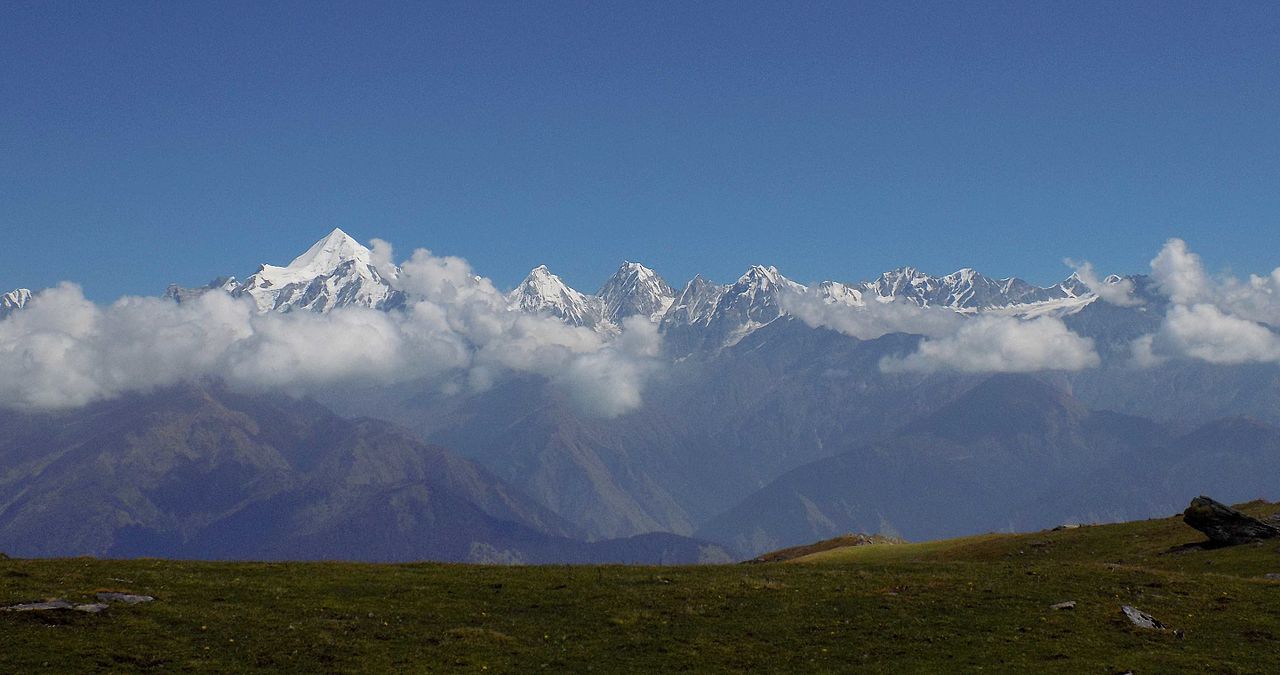
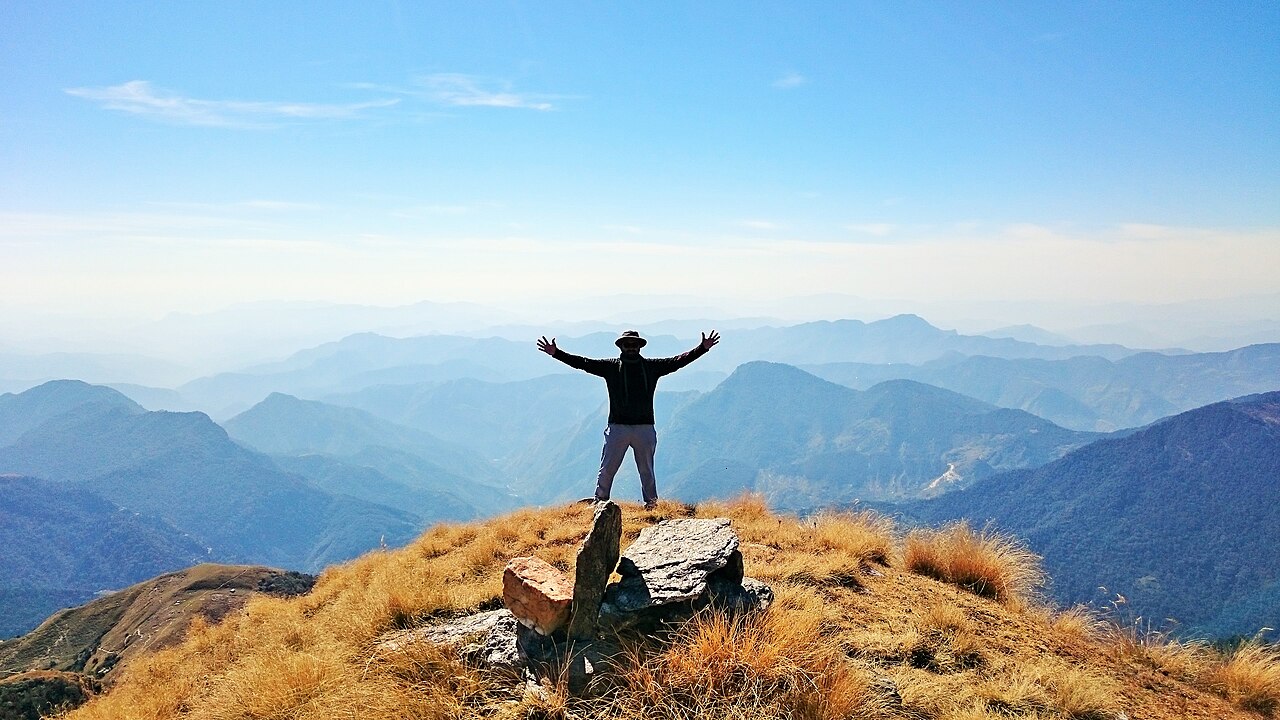
The trail becomes a grassy ridge that climbs gradually. The final 500m is a gentle slope to the summit ridge. As you reach Khaliya Top (3,200m), the full panorama reveals itself:
- Panchachuli Peaks (6,904m - 6,334m): The five sacred peaks, directly in front of you
- Nanda Devi (7,816m): India's second-highest peak, to the northwest
- Nanda Kot (6,861m): Near Nanda Devi
- Hardeol (7,151m): North of Panchachuli
- Rajrambha (6,537m): Between Hardeol and Panchachuli
- Om Parvat: Visible on very clear days
Sunrise at Khaliya Top: The Experience
If you do the sunrise trek, here's what to expect:
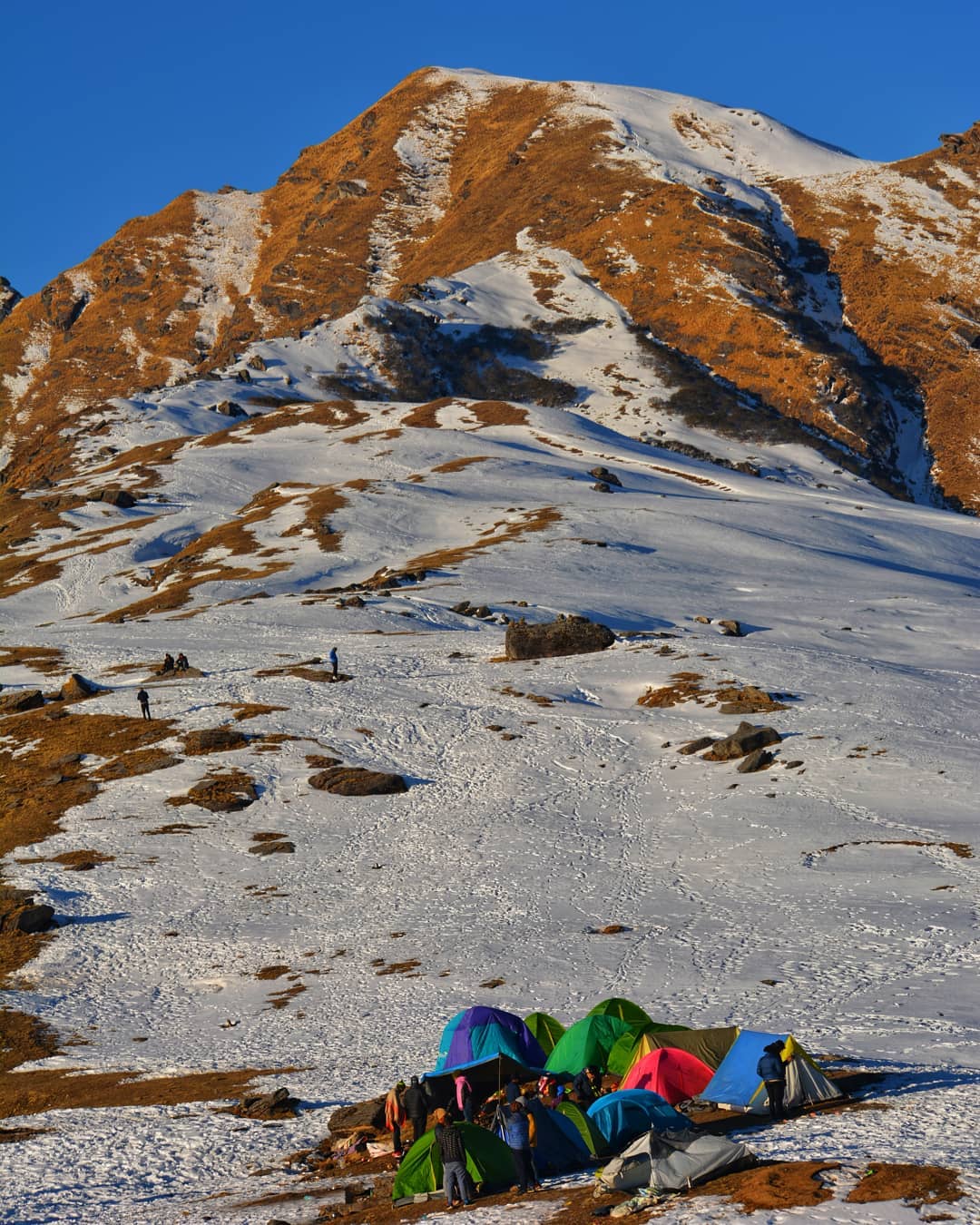
You'll arrive at the top in pre-dawn darkness. The peaks are silhouetted against a sky full of stars — if it's a clear night, you can see the Milky Way. As dawn approaches, the sky behind the peaks turns from deep blue to violet to pink.
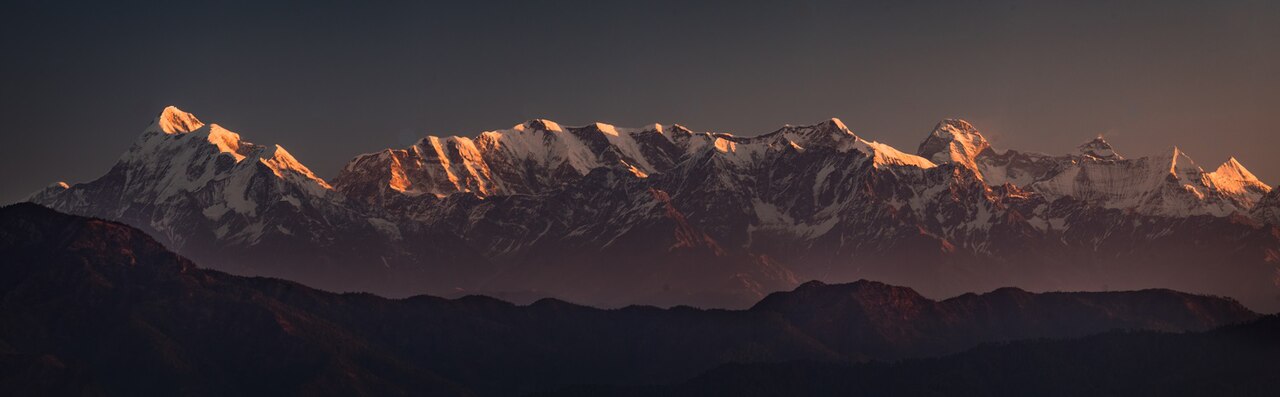
Then the first ray of sunlight hits the summit of Panchachuli I, and a golden flame seems to travel down the ridge as each peak catches the light in turn. The snow transforms from cold grey to warm gold to soft rose. The entire light show takes about 20-30 minutes.
The sunrise at Khaliya Top is not just a view — it's a feeling. The silence, the golden light, the sheer scale of the peaks before you. It's the kind of moment that makes you understand why the ancients called these mountains sacred.
After sunrise, spend an hour at the top. Have a packed breakfast (your hotel can arrange this). Take photos, but also take time to simply sit and absorb the panorama.
Difficulty Assessment
The Khaliya Top trek is rated Easy-Moderate, but let's break that down:
What Makes It Easy
- Well-defined trail throughout — no navigation challenges
- No technical sections — no rock climbing or scrambling
- Can be completed in a single day
- No permit required
- Max altitude of 3,200m is manageable for most people
What Makes It Moderate
- 1,000m elevation gain in 6 km is a significant climb
- Some steep sections in the forest
- Altitude of 3,200m may affect unacclimatised trekkers (shortness of breath)
- The sunrise trek requires starting at 3:30 AM and trekking in darkness
- Descent can be hard on knees — use trekking poles
Fitness Requirement
You should be able to walk 12 km on flat ground without difficulty. If you can climb 10 flights of stairs without stopping, you can do this trek. However, altitude affects everyone differently — go at your own pace and take breaks as needed.
What to Carry
Essential Gear
- Trekking shoes: Sturdy shoes with good grip. No sneakers or flip-flops.
- Day backpack: 20-30L capacity
- Water: 2 litres minimum
- Headlamp: Essential for sunrise trek (starts in darkness)
- Warm jacket: It's cold at 3,200m, especially before sunrise
- Windcheater: Wind is strong at the summit
- Trekking pole(s): Reduces knee strain on descent
Recommended Items
- Packed breakfast and snacks (energy bars, dry fruits)
- Thermos with hot tea/coffee
- Sunscreen and sunglasses (UV is strong at altitude)
- Woolen cap and gloves (especially for sunrise trek)
- Basic first aid kit
- Camera (fully charged, spare battery — cold drains batteries fast)
- Plastic bag for carrying back trash
Best Time for the Khaliya Top Trek
| Month | Conditions | Recommendation |
|---|---|---|
| March | Cold but clear. Some snow on trail. | Good — carry warm gear |
| April | Ideal. Rhododendrons in bloom. | Highly recommended |
| May | Warm and clear. Peak season. | Highly recommended |
| June | Warm. Haze may develop late month. | Good |
| July-August | Monsoon. Trail slippery, leeches. | Avoid |
| September | Post-monsoon. Trail recovering. | Fair |
| October | Excellent. Clear skies, cool. | Highly recommended |
| November | Cold but clear. Some snow possible. | Good — carry warm gear |
| December-February | Snow on trail. Very cold. | Only for experienced winter trekkers |
Hiring a Guide
A guide is not mandatory for the Khaliya Top trek — the trail is well-defined and easy to follow. However, if you're:
- Trekking alone
- Doing the sunrise trek (in darkness)
- Not experienced with mountain trails
- Unsure about your fitness level
...then hiring a guide is a good idea. A local guide costs ₹500-800 for the day and can be arranged through your hotel or the Munsyari Trekking Association.
Common Mistakes to Avoid
1. Starting Too Late for the Sunrise Trek
If you want to see the sunrise, you must reach the top before it happens. Sunrise is at approximately 5:30 AM (summer) to 6:45 AM (winter). Start at 3:30 AM from Balanti Bangla. Leaving even 15 minutes late can mean missing the light show.
2. Not Carrying Enough Water
The climb is demanding and at altitude you dehydrate faster. Carry at least 2 litres. There are no water sources on the trail.
3. Wearing Inappropriate Shoes
The trail has rocky sections and can be slippery (especially in the forest). Trekking shoes with good grip are essential. Sneakers are not adequate.
4. Underestimating the Cold
At 3,200m, especially before sunrise, the temperature can be near freezing even in May. Carry a warm jacket, cap, and gloves for the summit.
5. Rushing the Ascent
Altitude affects everyone. Climb at a steady, comfortable pace. Take breaks. Listen to your body. If you feel dizzy or nauseous, stop and rest. There's no rush — the mountains will wait.
What to Do After the Trek
After descending, you'll be back at your hotel by 10:00-11:00 AM. Here's how to make the most of the rest of your day:
- Hot shower and clean clothes — your body will thank you
- Hearty lunch (Kumaoni thali at The Aama Palace is perfect post-trek food)
- Rest on the terrace with mountain views
- Gentle stretching or yoga to prevent soreness
- Early dinner and an early night — you'll sleep well after the trek
The Khaliya Top trek is the highlight of any Munsyari trip. It's achievable for most fitness levels, requires no technical skills, and delivers what may be the finest day-trek view in the Kumaon Himalayas. The Aama Palace can arrange your jeep to the trailhead, packed breakfast, and guide — just ask when you book.
Ready to Trek Khaliya Top?
Stay at The Aama Palace and let us arrange your trek — jeep to trailhead, packed breakfast, guide, and a warm bed to return to.
Plan Your Trek